Hear the full tune here https://seangeraghty.bandcamp.com/track/drum-and-the-whip
Lean on your oars, the dogs of dry land
have no sanity clause
A deafening silence, the clutching of straws
look to the skies, it ain’t big, it ain’t pretty
no sucker survives, in what’s left of that city
when the, gunboats arrive,
at our finger tips, a drum and a whip
Who says its robbery, same ones that framed it
Islands an’ mountains, jacked an’ they claimed it
With a cross in a book, at their
Finger tips , a drum and a whip
At their fingertips a drum and a whip
Empty the holds, don’t miss a stroke
Theres blood in the banks, it sweetens the smoke
Fresh hands in old chains, you’ll drop like a stone
Keep the cat in the bag, the skin on your bones
Merchantmen haulin’ dockgates are open,
Temples are rusting, across the wide oceans
The monuments rose… from our
Fingertips, the drum and the whip
Lean on your oars, Business is booming
for lash and cajoling the vessels ain’t moving
country retreats, fa’who’re noble and willing,
who’d do the king’s biddin’ or drink the kings shilling
at their finger tips, the drum and the whip
at their finger tips, the drum and the whip
THE DRUM AND THE WHIP
(Sean Geraghty)
Production & Arrangement : John Robertson
Sean Geraghty : Voice and Acoustic Guitar
John Robertson : Voice, Electric Guitar, 2nd Accordion, Keyboards, Drums
Andrew Dickson : Accordion
Ben Kypreos : Double Bass
Matt Barge : Trumpet
Paul Guest : Saxophone
Recorded & Mixed at Little Winters Studio www.fsharpminor.co.uk







What is this about?
This is a take on the British Empire’s ‘hidden’ trade of slavery. How it is still concealed in the current narrative as ‘bringing civilisation’ to the world, and examining the way we learn our history through the images and artefacts that keep the myths alive. I read quite a lot of stuff during the BLM protests after the George Floyd murder. It was about time I suppose, that different voices came to light. With mobile-phone cameras and the internet allowing a lot more circulation of information it’s probablythe first time more people can generally see things from different perspectives; and maybe reassess certain things? Many things came to light, like ‘legacy’. For instance a local Dorset MP who still holds a massive private estate and still owned plantation lands in the Caribbean; something that when challenged on, he defended with an impressive lack of shame and overblown sense of entitlement that only the most priviliged members of our class-system can muster. There is no way anyone should feel ok about the legacy, but clearly some do. I wrote the tune thinking about the sheer brutality involved in capturing, abducting and enslaving those millions of people. Also, how people that made huge fortunes back then, from the sickening trade still benefit, and how they couldn’t have done it on their own, they had plenty of help from subordinates.
There are many people with ‘old money’ in UK today made through activities directly or indirectly involving the slave trade in a bonanza that went on for centuries. Eventually the freed slaves obtained ‘freedom’; but former ‘owners’ took no responsibility for their situation, gave them no land, made no attempt to repatriate them (after 400 years and with no records beyond ‘shipping labels’ it was pretty difficult to unravel who might have come from where). Many slaves therefore had few choices open to them; they could starve or remain in their situation, working for next to nothing, in the same places they had previously been enslaved. They had no property or means, and little in the way of resources. Any people travelling elsewhere looking for work were often intercepted by agents invoking the vagrancy laws in the southern states and many were sent into forced unpaid labour at the whim of their new captors. I read an extraordinary account of life in the twenties and thirties from a travelling box-car musician and Bluesman, Honeyboy Edwards, ‘The World Don’t Owe Me Nothin’. The vagrancy laws were a trap.
The slave plantation owners were substantially compensated for emancipation. Win-win for them. There seems to be a case thast no one has ever answered for, that they have all got away with it. A trail of carnage leading back to the British extends its long talons out all over the world. The Albert Memorial outside the Albert Hall in Hyde park sums up the extent of influence and subjugation. A gilded little bald fellow sits on the most grotesque of throwns flanked by sculptures depicting the four corners of the world that Britain put a stamp on. In Australia, India, Africa in America and also China. America, the ‘new world’ where the europeans commited unimaginable atrocities on the native americans; blankets with small-pox, massacres, reservations… before we even created that great slave-nation with all its myriad of dysfunction, inequality and underlying tone of volatility. In the history books I was taught in school we almost celebrate our conquest, sing songs about Britannia ruling the waves, the maps of empire were seen as achievements.
I also read during BLM days that the first slaves put into servitude in the caribbean were Irish, sometimes in indentured labour, other times to settle ‘debts’ in the colonies but they ‘weren’t built for the climate’ and lacked requisite strength, so the sugar plantation owners turned to Africans, where a. busy trade in slaves was already established. A lot of irish were employed by owners as gangers, or slave-foremen, to show the new arrivals the ropes and teach them the language, and ‘discipline’ hence the similarity in pronounciation in Jamaican and Irish/English. (‘Three’ pronounced ‘tree’ etc.)
Anyhow, the tunes 6-8 timing has a sea-shanty feel, a traditional horn-pipe is in 4/4, both numbers add up in 12’s so regardless of how you listen, hopefully the feeling is nautical. We wanted it to have that seafaring nature. It was difficult to find any ‘vibe’ with the time signature, it isn’t something that lends itself to a groove and takes a lot of work for a drummer to maintain, I imagine. I imagine that because it was completely beyond me, I left all the hard work to John Robertson, who picked up the song when I wanted to drop it and found a way forward.
Once we were all back on board, we wanted the palette of instruments to reflect the sea, and the instruments of the sailors, we went for an accordion over a violin. I had it in my head that a horn line would be good, I wanted jamaican horns, firstly because I grew up with reggae of the 60’s and 70’s and I can only think of horns sounding that way; also because it made a musical connection between the British folk instrument the accordion and the caribbean. We were thinking about an African element to complete the triangle of the hidden trade, hopefully there’s enough there in the lyrics to make the link.
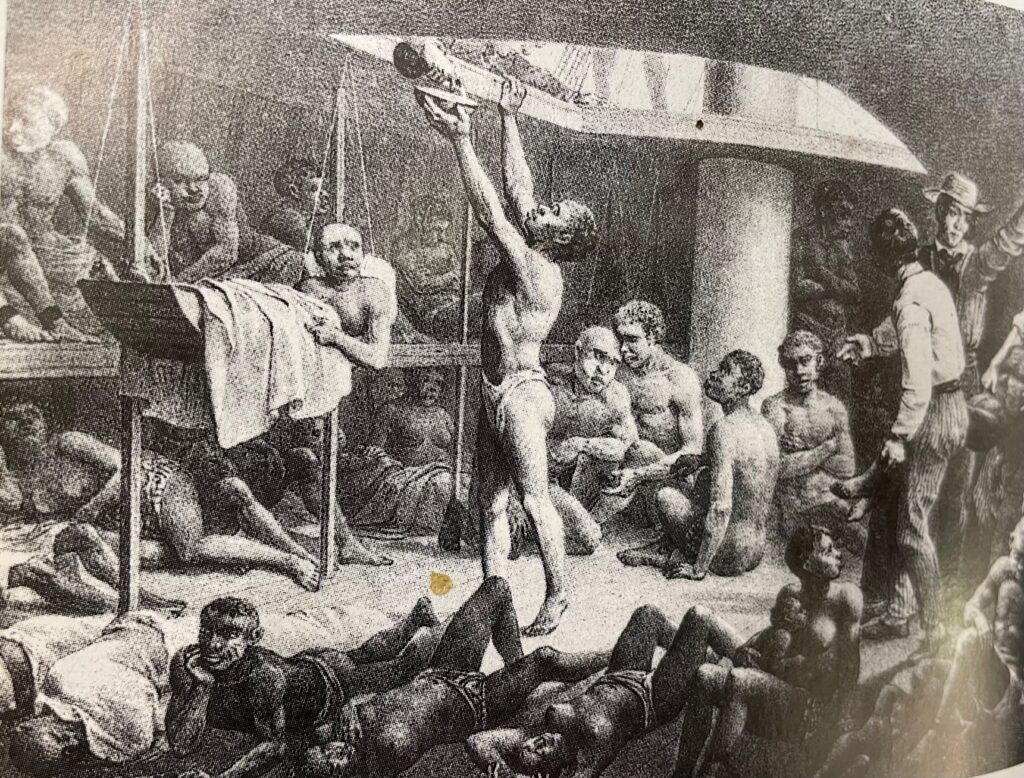
The lyrics developed along with the instrumentation. It was imagined as a relentless slog, from the galleys in the days of Spartacus and the great slave-rebellion of the Roman Empire. Down in the depths of a ship, slaves were thrashed with a whip to the beat of a drum, worked to near death and thrown overboard to feed the sharks if they ceased to be useful. The lyrics are a wish really, that if somehow they had all refused the ship would have stalled. If the engine stops the machine stops working. You cant achieve anything without the engagement of ‘little people’. That was another lesson of the lockdown. Nothing works unless everything works, everyone is a valuable cog in the machine.
The way things ‘worked’ through history was brutality, which is still an option for persuasion and the simplest way for the ‘boss’ to get the little people to do the work. Whipping the less fortunate into the required shape is sometimes called a ‘Carrot and stick’ approach and is generally reserved for animals. The slaves were certainly treated like animals, like farmstock going through a similar processing of auctions, transportation by cargo hold, with minimal sustenance or any consideration.
The carrot and stick approach was still employed at schools when I was young. (obviously not on the same scale in any way, but in a ‘final solution’ sort of way for those that wouldnt comply). I got caned on one occasion, it was pretty mild a mere 3 lashes. Six of the best happened a lot more to kids in schools earlier in the 20th Century. The leather-strap or cane were once an optional aid for teachers. A remedy for every childhood ailment, from dyslexia, tardiness, malnutrition, short-sightedness, poor grammar etc. We think of that as brutal now. Imagine being flogged to death as an example to others. Imagine the thinking, that these people were treated worse than animals, that they could be punished in any way an owner saw fit.
We still work to the rhythm set by the drummer today, sometimes it could be the pied-piper. The whip takes many forms if you decide to down-tools for any reason. Most galley slaves having watched a colleague get singled out for punishment wouldn’t fancy any of that themselves, most people ‘save our own skins’; even if we are in some form of physical or mental dungeon, it may seem better than nothing, the will to survive is the most primal of all motivations. People don’t realise that their silence is interpreted as approval; or, and I have been wondering about this; whether people actually go along with the way things are, only wishing they could get their hands on the whip and would do the same with it to those less fortunate if they did manage to have the whip hand.
The lyrics:
Lean on your oars, the dogs of dry land have no sanity clause.
Here I’m trying to think about what it would be like if the people enabling the decision makers stopped running the engines. Lean on your oars is like saying down tools until we know what this is all about here.
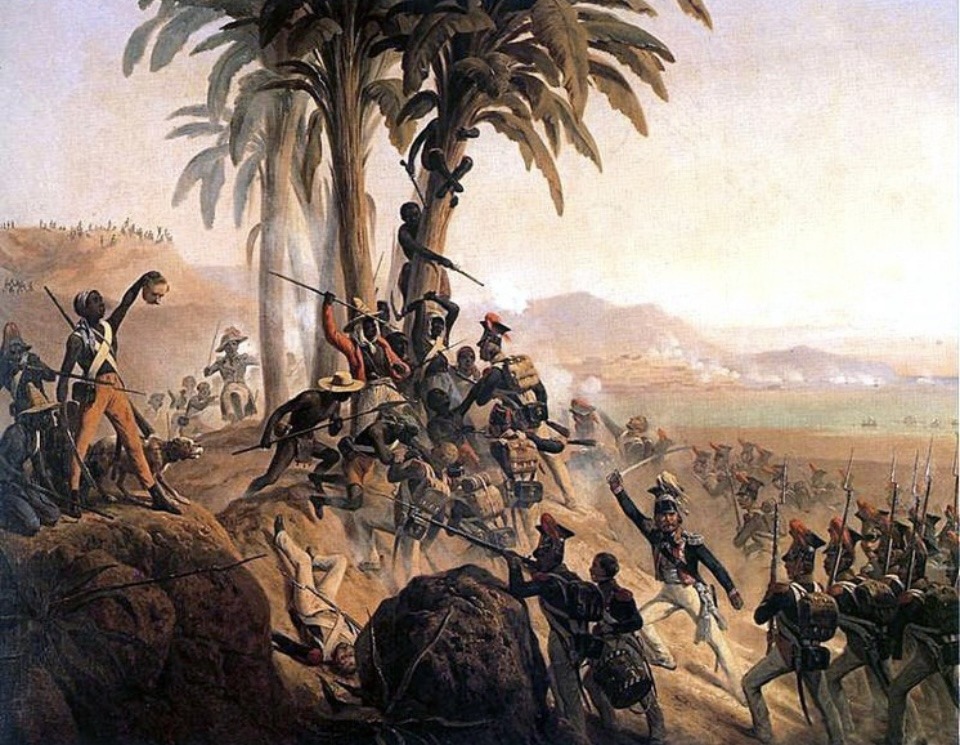
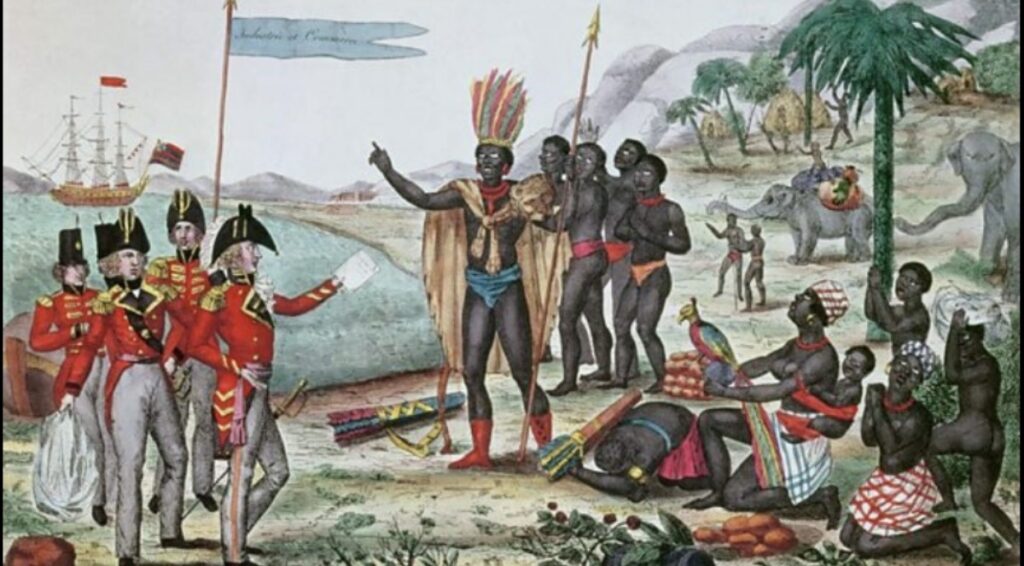
The dogs are the packs of invaders that went from Europe to little islands and places all over the globe and went berserk. Who knows what they got up to, imagine a lot of it was bestial; rape, pillage, ransacking thieving and enslaving. You’d never know from the history books. The images of puffed up naval officers shaking hands with befeathered friendly chiefs, sitting on blankets trading. You wonder that anyone minded at all, the way it is portrayed; how kind and civilised we Europeans must have seemed with our civilised ways.
A deafening silence, the clutching of straws
There’s a general pretense that nothing bad happened, or if it did the British with their big fat Victorian queen left a happy ‘commonwealth’ behind her, etc.
When you read about what ‘we’ did, it’s spun as some sort of service about how ‘we civilized the world’, rather than how we exploited our technological advantages.
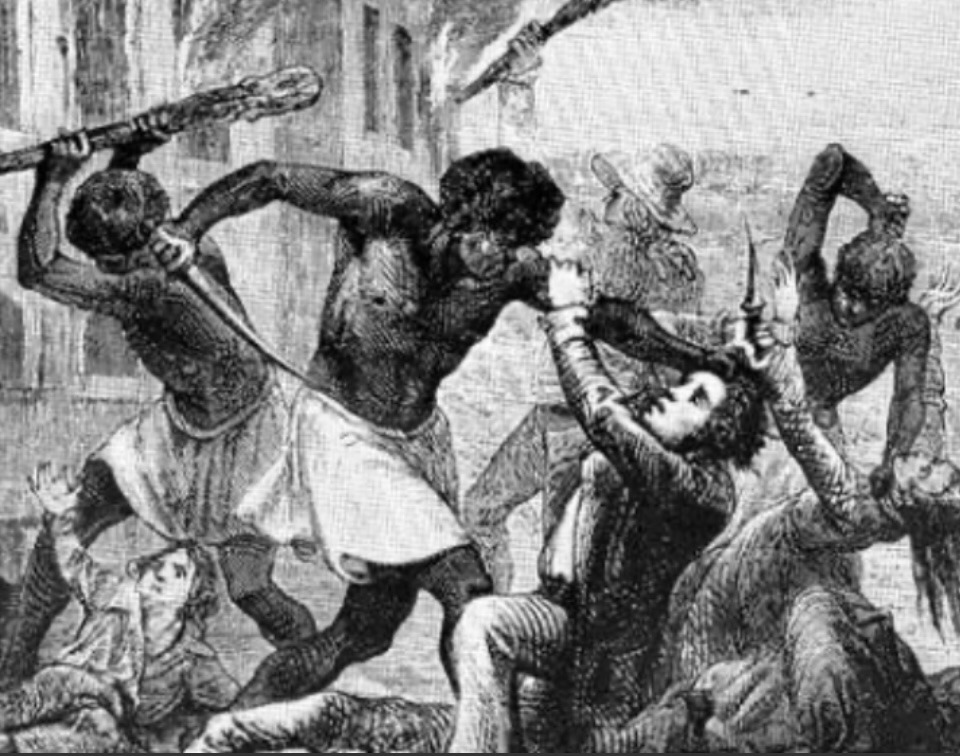
We were told in school how we ‘expanded’ our empire, how we colonised; not that we stole land, enslaved, tortured, and murdered our way to having an empire that gave the British ruling classes tremendous wealth and influence. Resistance was met with a savage brutality to set an example. The Mau-Mau uprising one case in point, of many. We were far from benign masters.
I was told that we were ‘civilising the world’, to me that is ‘clutching at straws’. We were exploiting the situation, along with all the other colonialists.
I say ‘we’, but it was our ruling class. The ‘dogs’ sent to do the deed were often abducted from the land, pressed into service treated with a similar brutality as their victims to ensure a blind obedience, similar to that of trained animals. If a sailor (press ganged into service) lost a limb or otherwise became a burden they were dumped at the next quayside to fend for themselves. Many never saw their home ever again. There were many casualties of the empire.
Look to the skies, it aint big, it ain’t pretty
no sucker survives, in what’s left of that city
We looked down on other human beings with our god who comes from the sky at their ‘primitive’ societies, treating them like sub-humans or idiots (suckers); we ignored and destroyed ancient cultures, (cities=societies) trivialising their existence, destroying environments, belittling their beliefs, taking sacred tribal objects, turning them into museum curiosities. The bowels of museums are crammed with looted artefacts.
When the gunboats arrive,
Gunboat diplomacy, give us what we want or we will flatten you with our cannons.
At our finger tips, a drum and a whip
We called the tune, forced them to work to our rhythm, we tortured and murdered any who opposed us.
Who says its robbery, same ones that framed it
Islands an’ mountains, jacked…
The Union Jack- The butcher’s apron, placed in the sand, claimed for the crown.
Jacking, also slang for hijack.
We renamed mountains, waterfalls, districts, lakes, countries, huge areas and landmarks after our Victorian Queen our interests or other ‘notable’ characters Rhodesia, Northern Rhodesia, Victoria Falls, Ayers Rock, The Gold Coast, New Hebrides, Virginia, The Carolinas, Georgia, Sydney, Ellice Islands etc etc
Crazy dogs marking their territory.
an’ they claimed it….. with a cross in a book
Waving a bible around as if it was some sort of holy mission endorsed by a higher power. Also a ledger of trade and commodities, little marks in notebooks; the trade and cultural mission going hand in hand to dominate and exploit.
At their Finger tips , a drum and a whip
At their fingertips a drum and a whip
Empty the holds, don’t miss a stroke
Moving stocks around, trading. The ports of UK grew from the empire-trades, stolen resources, extracted by whip strokes, ‘oar strokes’, galley slaves bringing back all the booty, no one caring much about where it came from or how it was obtained.
Theres blood in the banks,
Big, big money in the bank from the slave trade, human suffering, over centuries. By the river banks and the quaysides where the salves were transported.
It sweetens the smoke (Tobacco trade)
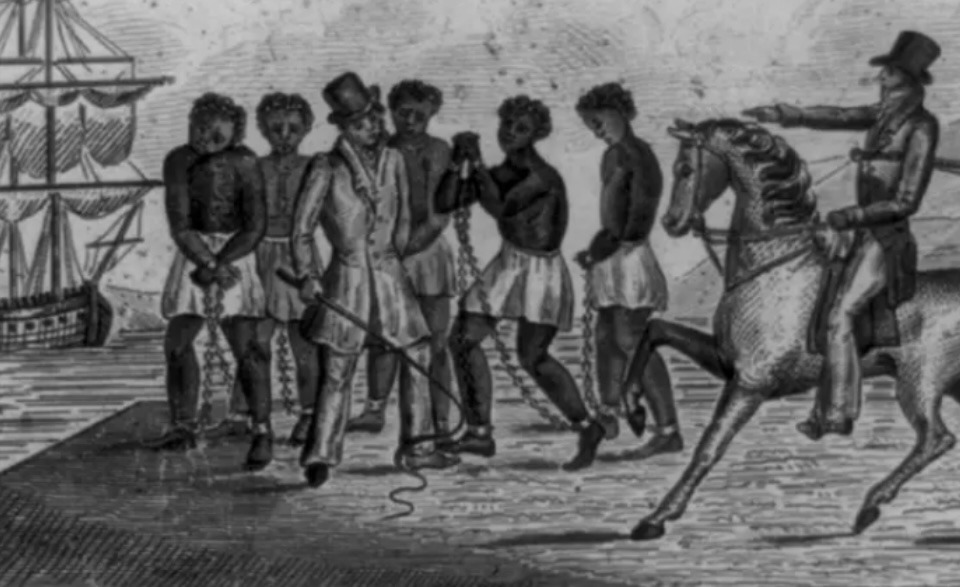
Fresh hands in old chains, you’ll drop like a stone If any slave or ‘coolie’ or native died or ceased to be useful they were replaced, worked to death then replaced, like faulty machines.
Keep the cat in the bag, the skin on your bones
Everyone involved kept quiet as they could about all the atrocities at the time. On a ship if you were caught misbehaving in any way, you’d get lashes from the boatswain’s cat of nine tails- Keeping the cat in the bag means keeping secrets. Also of flogging slaves at the mast or whipping posts, often to death if they tried to escape, or to set an example to others.
Merchantmen haulin’ dockgates are open, Respectable merchants emerged from the empire. Big succesful ports and cities grew up from the activites of slave traders and their kin. Invaders and thieves wearing the mask of respectability.
Temples are rusting, across the wide oceans
I saw a picture in a magazine of an old rusting corrugated iron church in a beautiful tropical jungle in one of the Micronesian islands. There was an account of how the missionairies got all the natives to start wearing clothes and covering themselves up. Especially after seeing the naked greeting-dance that the islanders motherless young women performed for visitors.
This ‘display’ shocked the colonists sensibilities; yet the purpose and its evolution probably kept the gene-pool turning over, or had evolved to attract people onto the island to ensure everyone’s survival. It didn’t account for the uptight British and their opinions on modesty.
In tropical forests with sunshine, the starchy, repressed europeans appeared with their bibles, banning ‘false gods’ imposing their mumbo-jumbo on what appeared to be fairly chilled out people.
Seeing a photograph of that redundant carcass; a forgotten temple rotting into the dust said it all for me. The religion disappeared with the money. Just another tool of control, another whip.
Made me feel really sad for the poor people who had to put up with the god squad on top of everything else. The missionairies were on a jolly and were probably up to no good.
Where monuments rose…
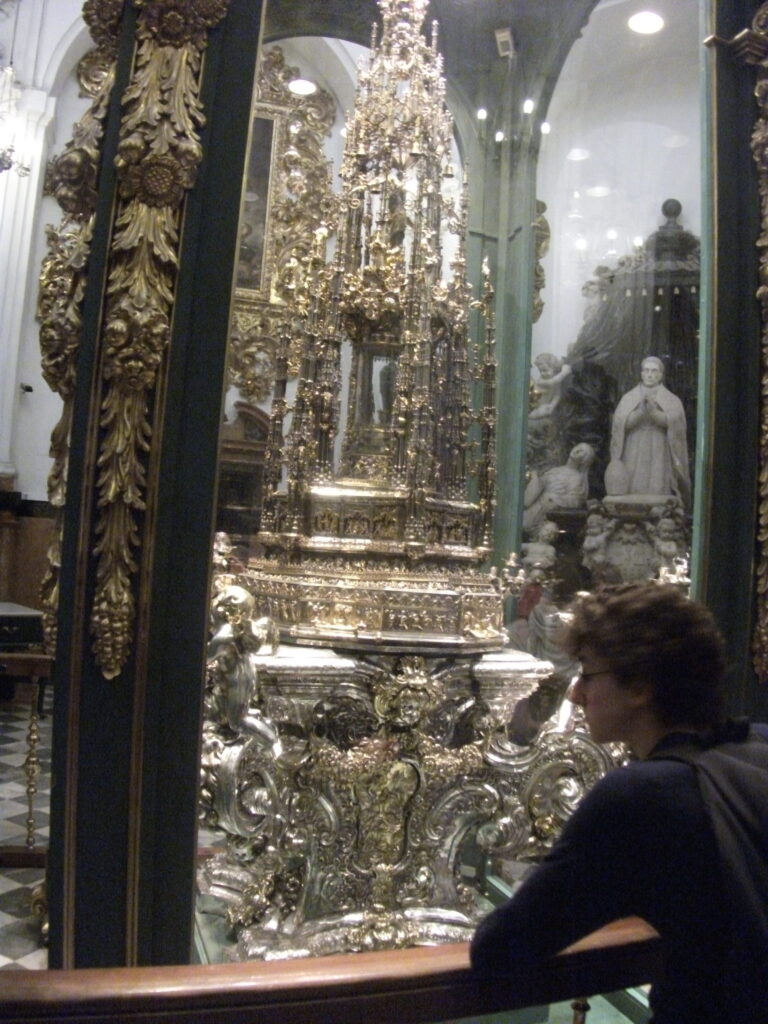
So many of the unsavoury people were celebrated in europe. Protected by the way history recorded them. Statues of Colston and many, many others have recently been correctly identified for what they were and their actual legacy, not the respectable glorified nonsense their monuments portray them as.
Lean on your oars, Business is booming
for lash and cajoling the vessels ain’t moving
More of a wish; that to stop business booming people need to stop any activity that perpetuates misery for the poorest in the world. There are still slaves, people working for a pittance, people being displaced and becoming economic migrants through no fault of their own.
Many of those that continue to possess wealth gained from the ancient slave trade don’t feel any guilt or remorse just entitlement; as mentioned earlier. They don’t appear to have any intention of making reparations as they feel no responsibility for their privilige or any responsibility for the problems that continue in society as a result of it. They have become part of the establishment over time and as long as they are doing ok there doesn’t seem to be any voluntary change on the horizon.
Country retreats, fa’who’re noble and willing,
who do the king’s biddin’ or drink the kings shilling.
At their finger tips, the drum and the whip
Even with the abolition of slavery in US, slave owners in UK and elsewhere received massive compensation. The old families still have their country piles and still hold the whip hand and set the rhythm. The mere ’freedom’ granted to the slaves saw them set free with no resources or funds, many had little choice but to return to work for their former ‘masters’. What kind of freedom is that? There is still a limited paper trail, maybe this needs addressing now.
The lockdown pretty much proved that we are all intertwined. Society can’t survive without the ‘little people’ doing the hard work. It shouldn’t be too much of a leap to realise that a greedy few taking too much of their share are the ones that need ‘throwing overboard’, casting out from our society as parasites. People are beginning to wise up to the past and the long fingers of slavery in the present, it’s still alive and kicking. The brainwashing is still very strong in the ‘civilised world’.
There are plenty of parallels with the class system and slavery, look at pictures of colonial days. The colonisers recreated all the trappings of home that they could. Red post-boxes, places renamed after bits of Blighty, polo clubs, cricket pitches, railway systems, huge buildings and infrastructures all constructed using European architectural styles.
In the paintings and photographs the people riding in carriages are privileged white people; the people shovelling up the horse manure, pulling the punkahs, picking the cotton, doing the dhobi and all the servile stuff are dark-skinned. Otherwise, the pictures are very similar to what was going on in England at the time. The system worked so well they exported it.
These countries have since declared independence.

